Skip to content
Mehdi Hassanbeigi
Predictive maintenance & machine learning2025Verified

Anomaly Detection for NYC Taxi Demand

Statistical methods, Isolation Forest and an LSTM autoencoder combined by ensemble voting to flag unusual hourly patterns in taxi demand.

Anomaly Detection for NYC Taxi Demand

Problem

Operational time series contain unusual events — demand spikes, outages, data errors — that need to be flagged quickly with few false alarms.

Technical solution

NYC yellow-taxi trips from January 2023 (100,000 sampled, 97,638 after cleaning) are aggregated into 2,367 hourly records. Statistical thresholds, Isolation Forest and a PyTorch LSTM autoencoder vote in an ensemble; results are served through FastAPI and explored in a Streamlit dashboard.

My contribution

Sole author: problem definition, implementation, experiments, evaluation and documentation.

Challenges

Evaluating unsupervised detectors without ground-truth labels, and balancing sensitivity against false alarms across very different methods.

Results

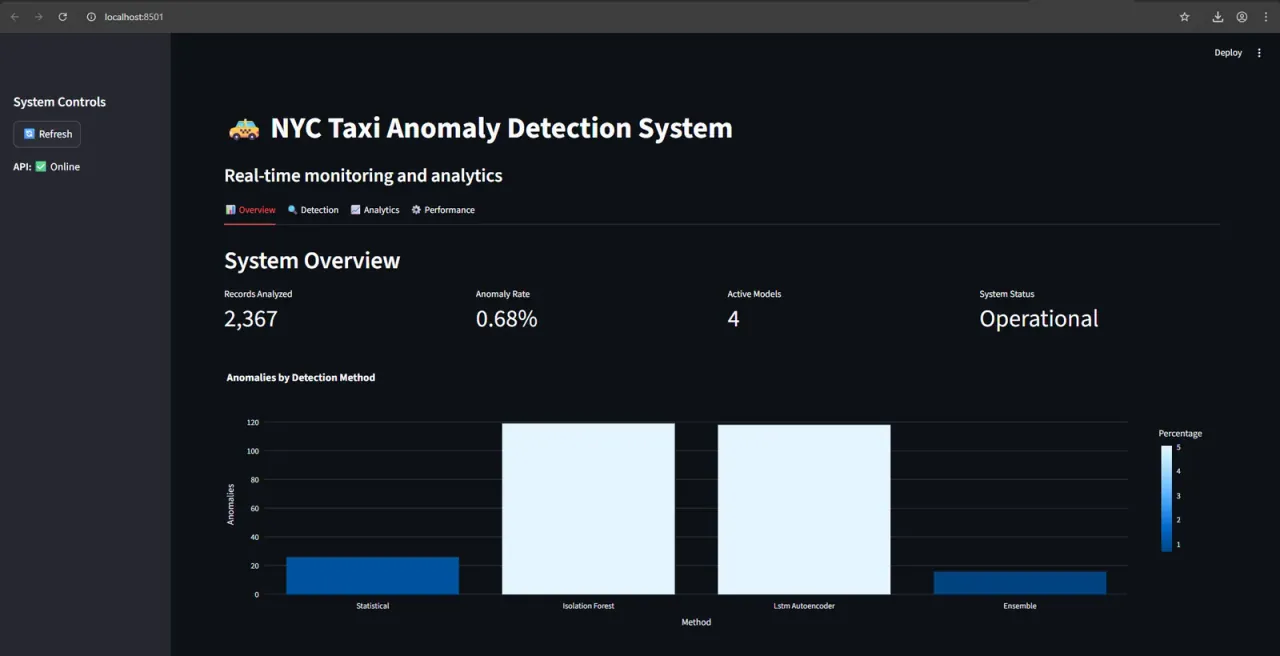
  • The ensemble flags 0.68% of hourly records for review.
  • An end-to-end pipeline from raw trips to API and dashboard.
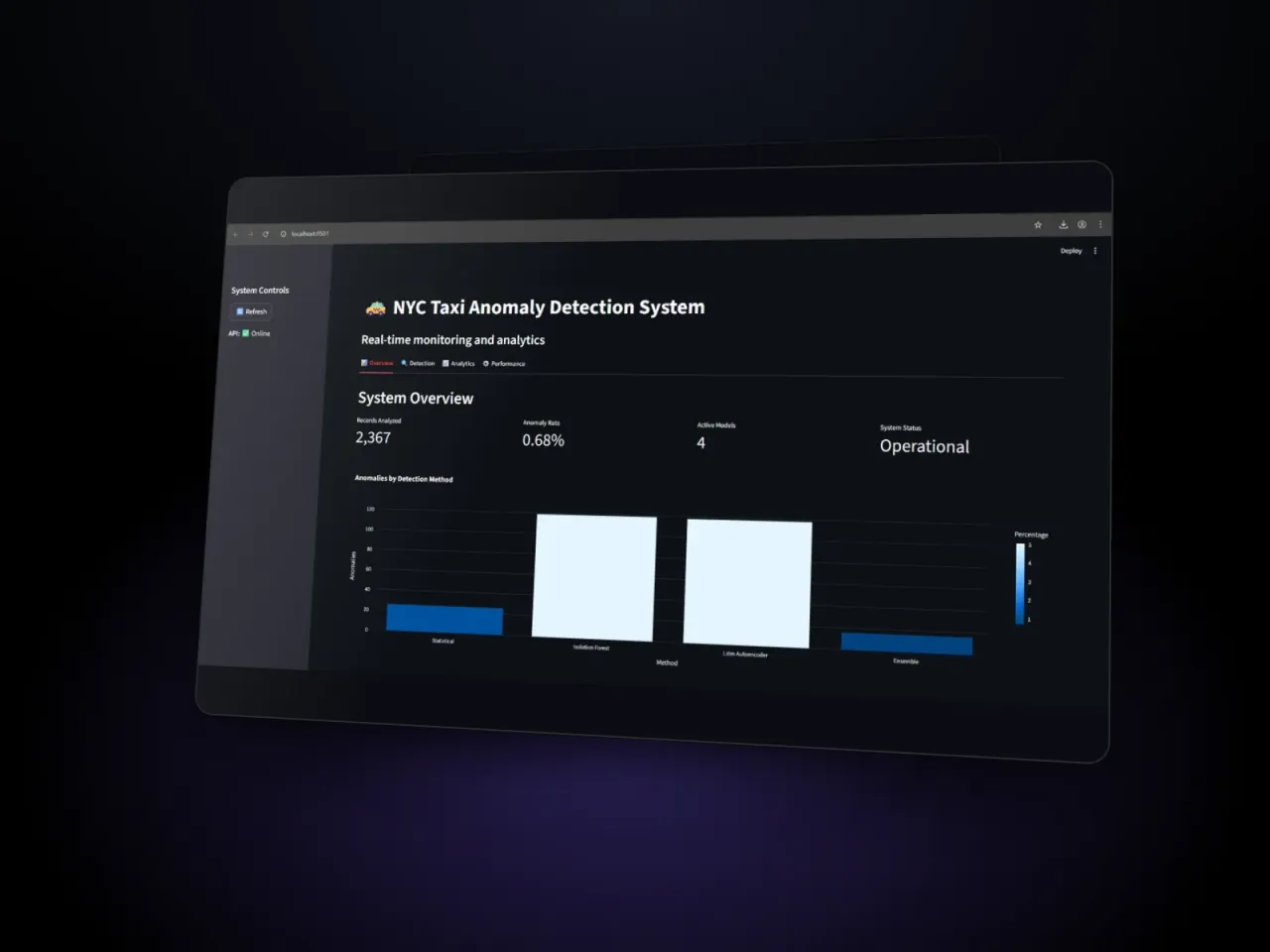
Anomaly detection dashboard overview
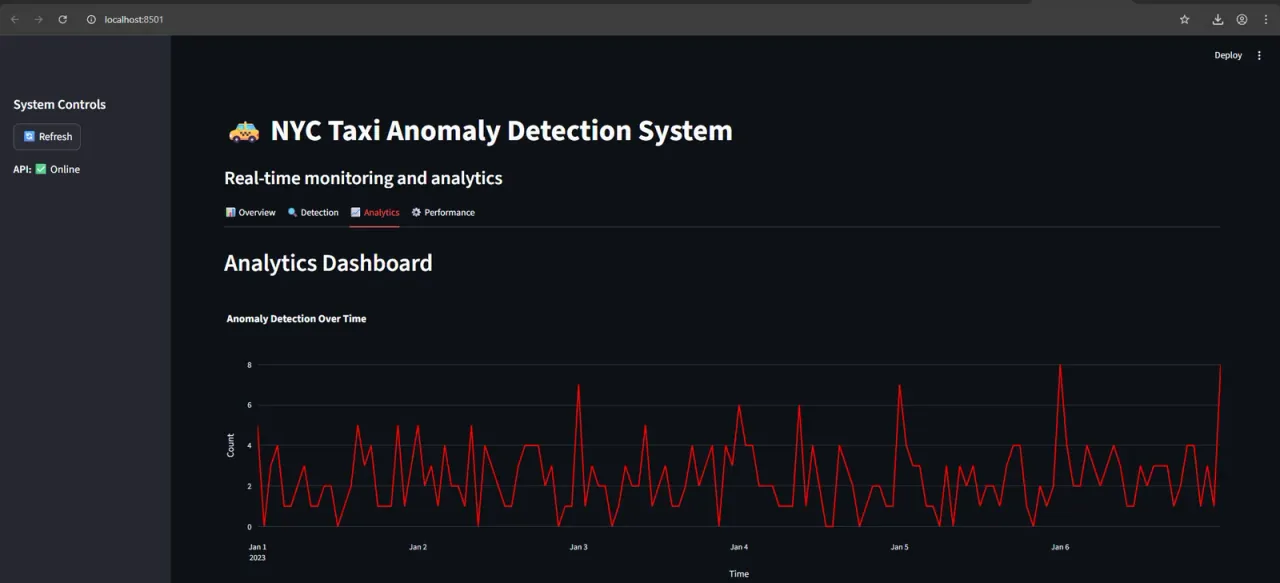
Comparison of detection methods over time

More projects

Predictive Maintenance Digital Twin

Predictive maintenance & machine learning2025

Predictive Maintenance Digital Twin

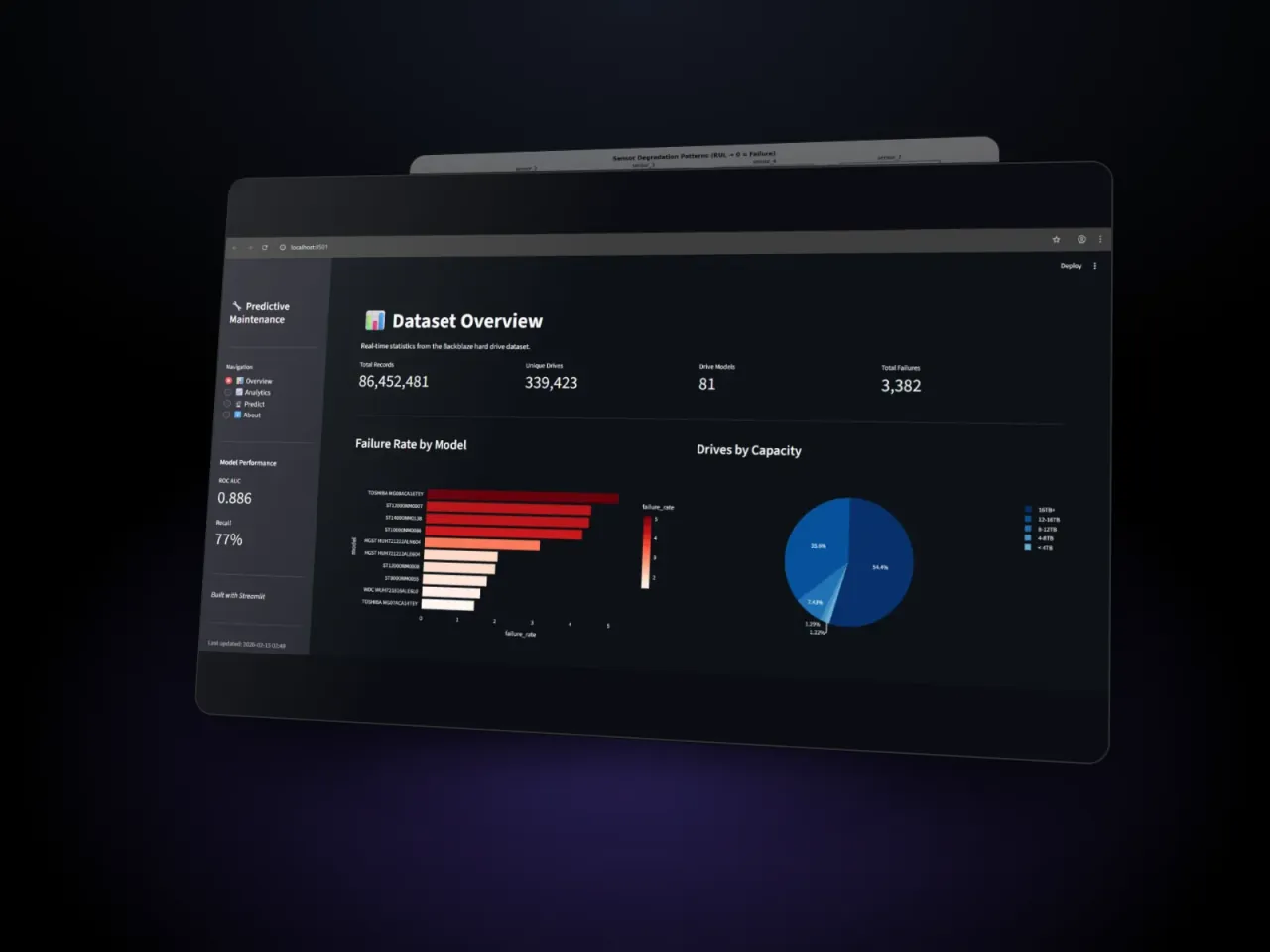
Hard-drive failure prediction on 86.4 million real-world records, combining Weibull reliability analysis with an XGBoost model served through FastAPI and a Streamlit dashboard.

XGBoost: ROC AUC 88.66%, recall 76.93% and precision 29.81% for failures 30 days ahead.

View details

Lithium-Ion Battery Degradation Analysis

Predictive maintenance & machine learning2025

Lithium-Ion Battery Degradation Analysis

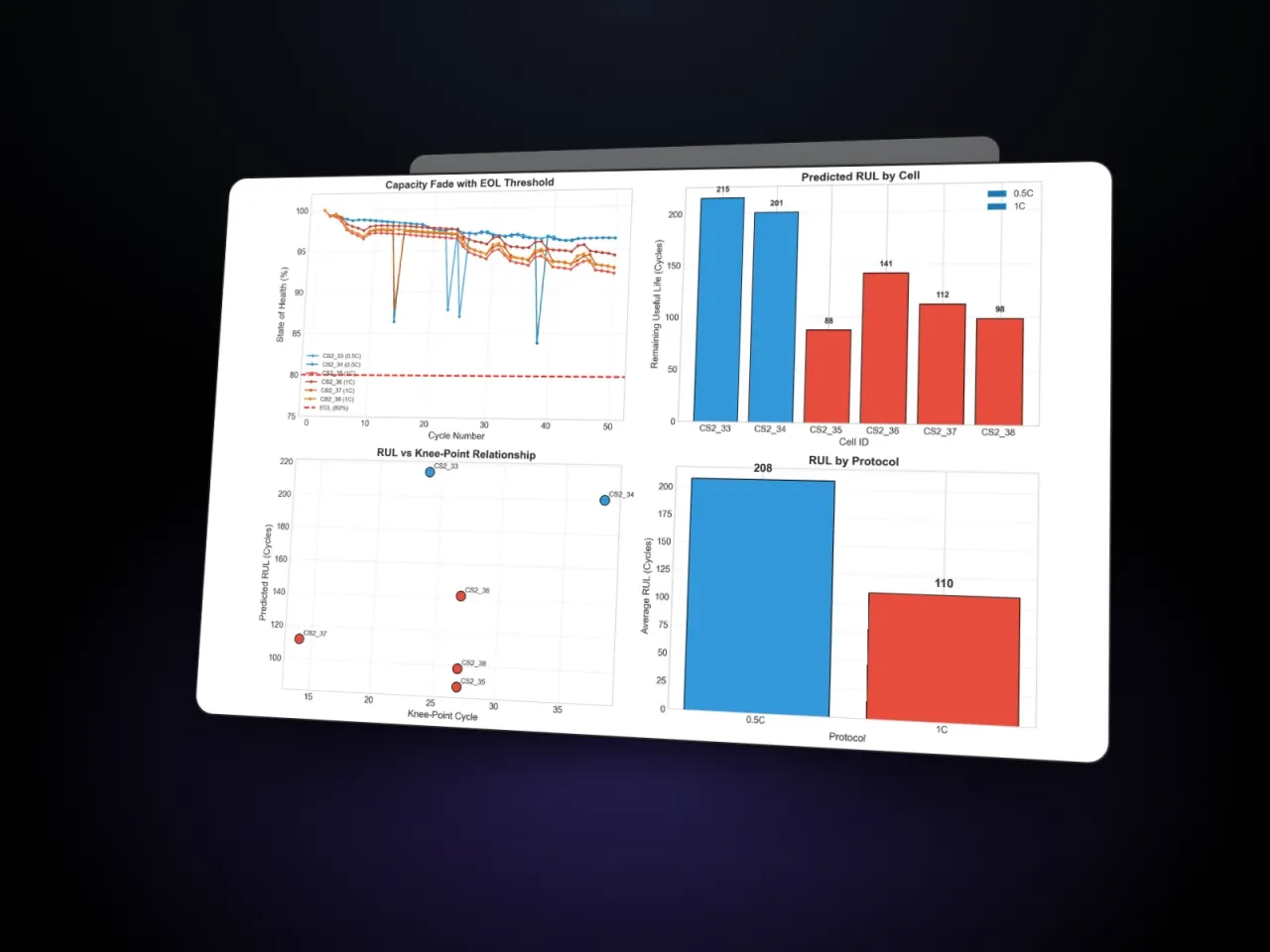
Electrochemical analysis, statistical testing and machine learning on the CALCE CS2 dataset — including an honest account of where prediction fails.

Gradient boosting reached R² = 73.5% under leave-one-cell-out validation for 1C cells (18.2% for 0.5C cells).

View details

Let’s scope your project

Share what you need. You will receive questions, an approach and a quote — no obligation.