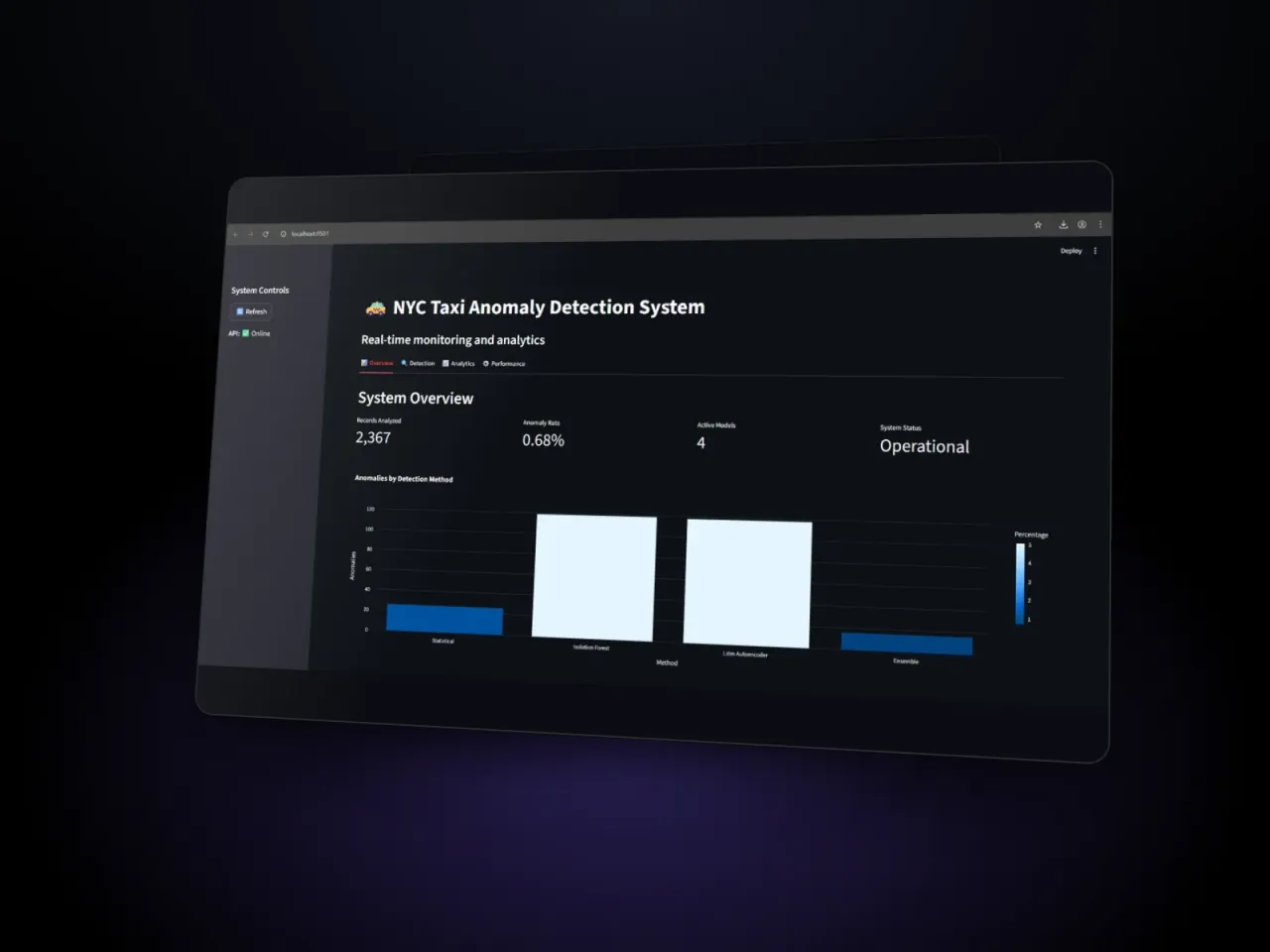
Anomaly Detection for NYC Taxi Demand
Statistical methods, Isolation Forest and an LSTM autoencoder combined by ensemble voting to flag unusual hourly patterns in taxi demand.
The ensemble flags 0.68% of hourly records for review.
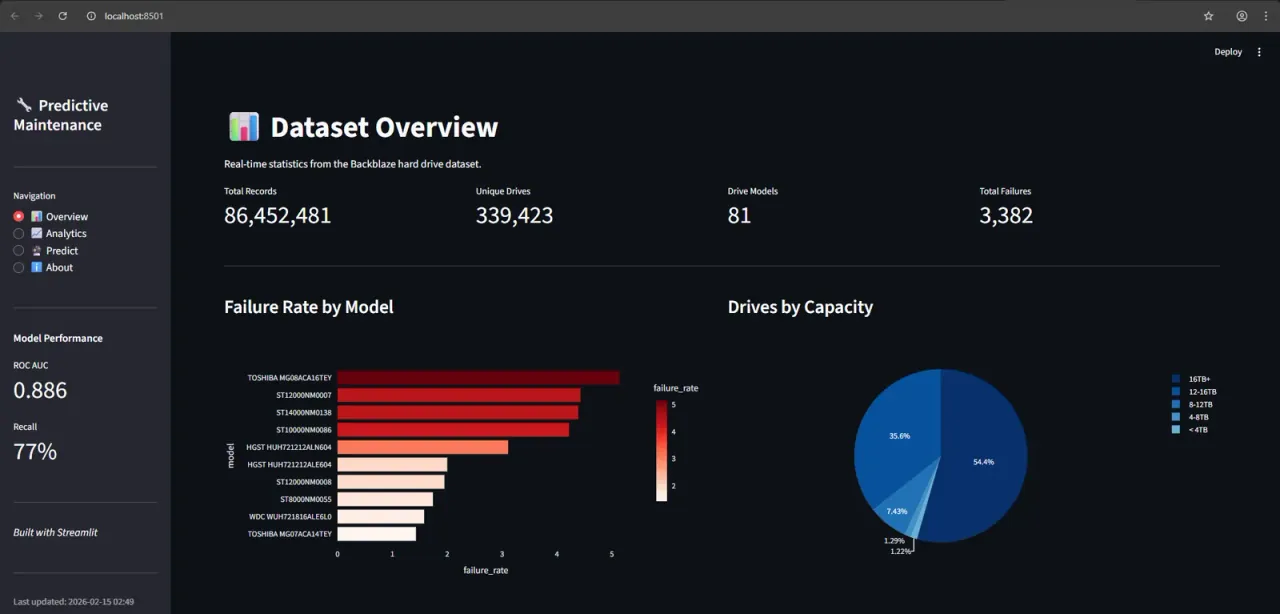
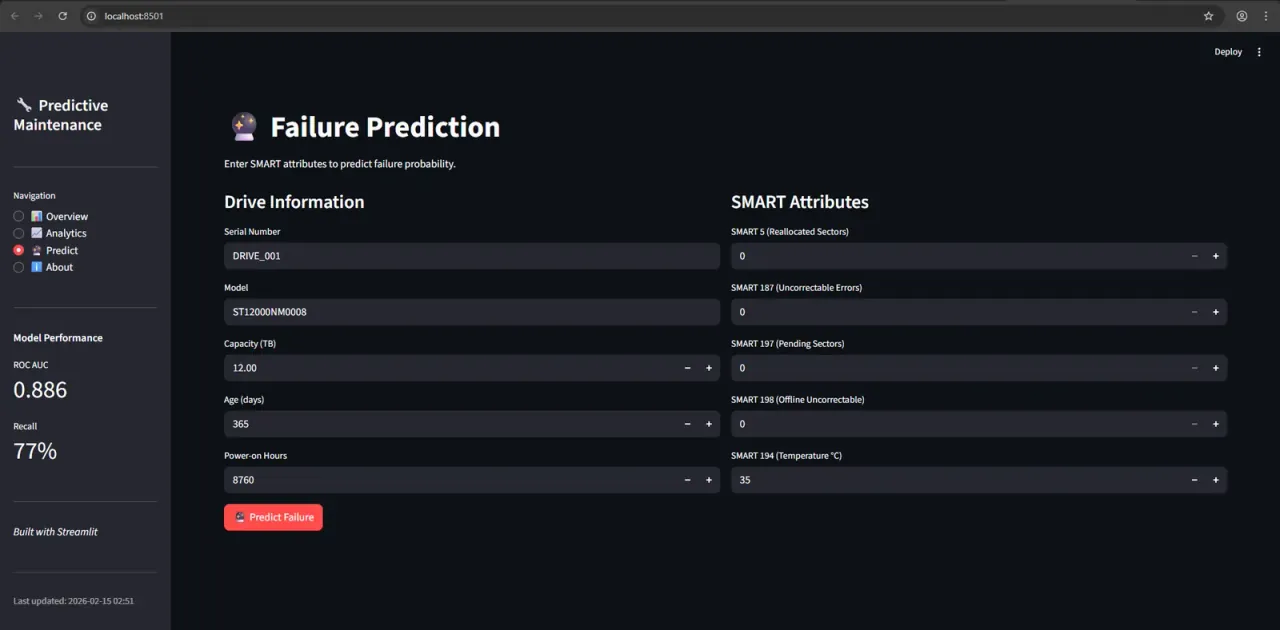
View detailsHard-drive failure prediction on 86.4 million real-world records, combining Weibull reliability analysis with an XGBoost model served through FastAPI and a Streamlit dashboard.

Unexpected hardware failures cause downtime and data loss. The goal was to predict which drives will fail within the next 30 days from daily SMART telemetry, and to quantify the reliability of the fleet statistically.
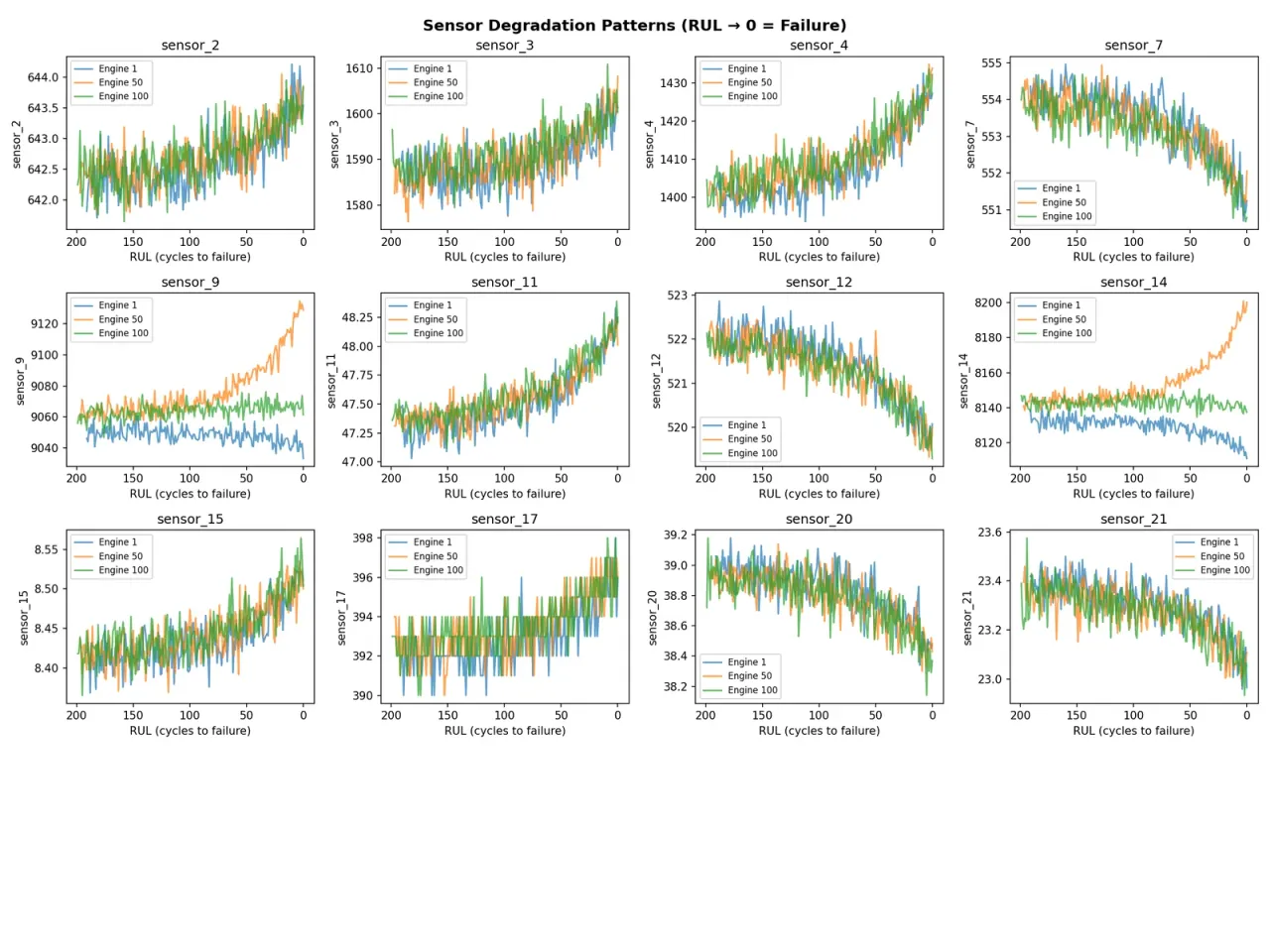
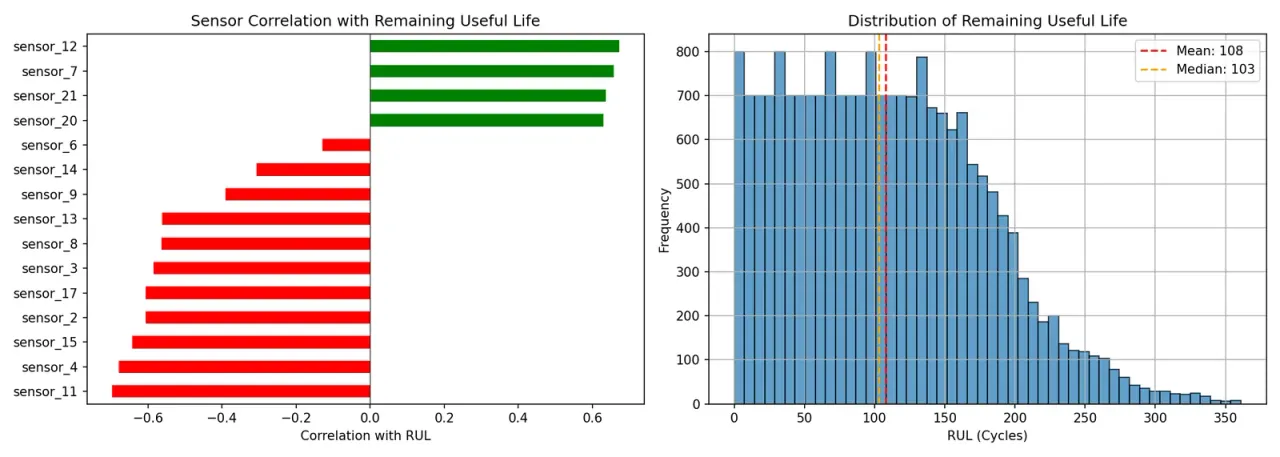
An ETL pipeline bulk-loads 273 days of Backblaze data — 86,452,481 records from 339,423 drives — into PostgreSQL with seven data-quality checks. Rolling 7- and 30-day features are engineered from SMART attributes; Weibull and Kaplan–Meier analysis characterise reliability; XGBoost, LightGBM and logistic regression are compared, and the best model is served through FastAPI with an interactive Streamlit dashboard. NASA C-MAPSS turbofan data was used for an initial exploratory analysis of sensor degradation.
Sole author: problem definition, implementation, experiments, evaluation and documentation.
Extreme class imbalance (a 0.0039% daily failure rate), building time-series features without information leakage, and processing tens of millions of rows efficiently on a single machine.
Statistical methods, Isolation Forest and an LSTM autoencoder combined by ensemble voting to flag unusual hourly patterns in taxi demand.
The ensemble flags 0.68% of hourly records for review.
View details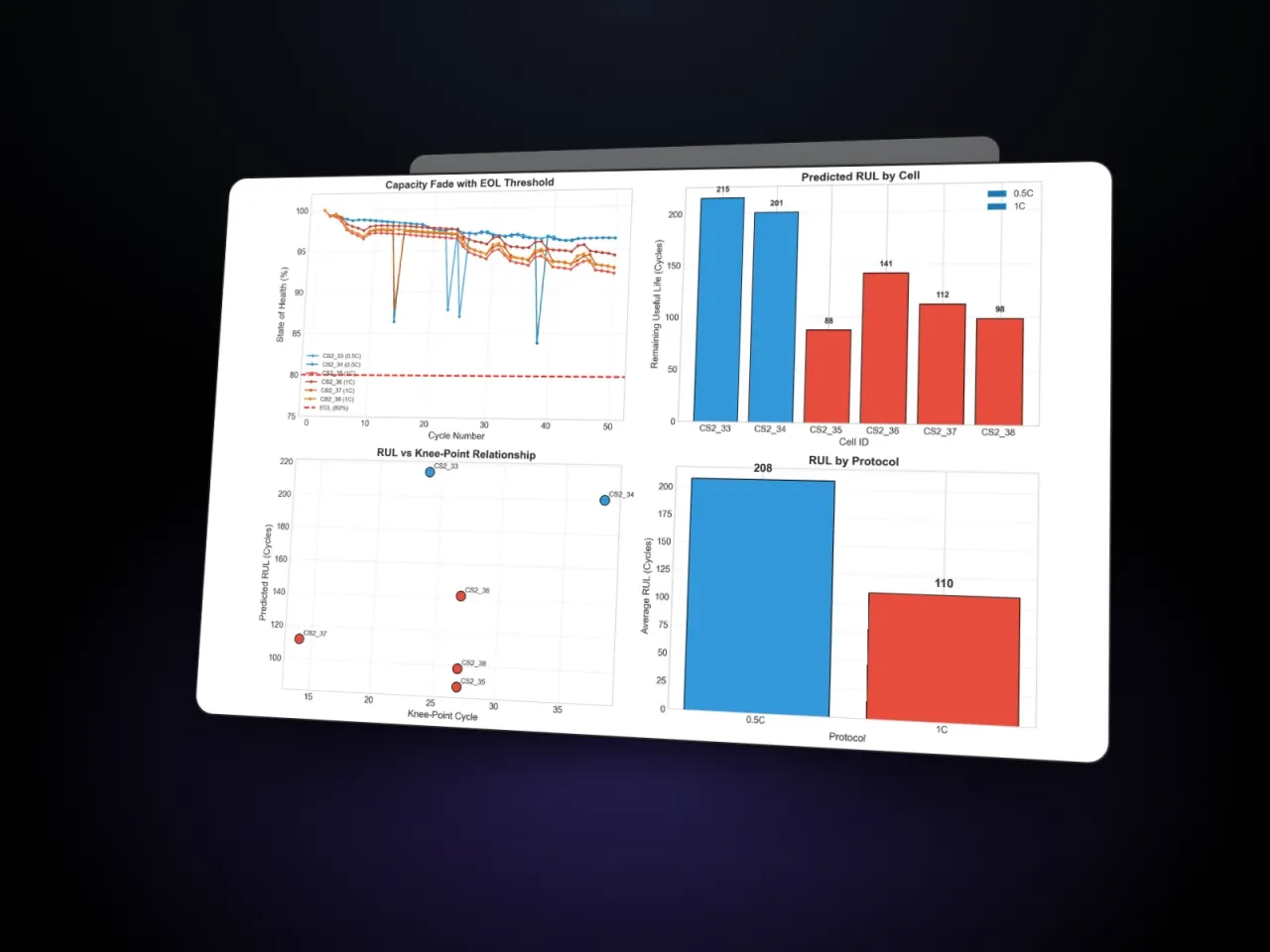
Electrochemical analysis, statistical testing and machine learning on the CALCE CS2 dataset — including an honest account of where prediction fails.
Gradient boosting reached R² = 73.5% under leave-one-cell-out validation for 1C cells (18.2% for 0.5C cells).
View details
Share what you need. You will receive questions, an approach and a quote — no obligation.