Skip to content
Mehdi Hassanbeigi
Scientific Computing2025Verified

LPBF Melt Pool Simulation and ML Surrogate

COMSOL models of laser powder bed fusion for Inconel 718, plus a machine-learning surrogate for fast exploration — with its limits stated plainly.

LPBF Melt Pool Simulation and ML Surrogate

Problem

In metal additive manufacturing, melt-pool temperature decides whether the process runs in conduction or keyhole mode, which drives defects. A full 3D simulation takes about 90 minutes per run — too slow to map the process window.

Technical solution

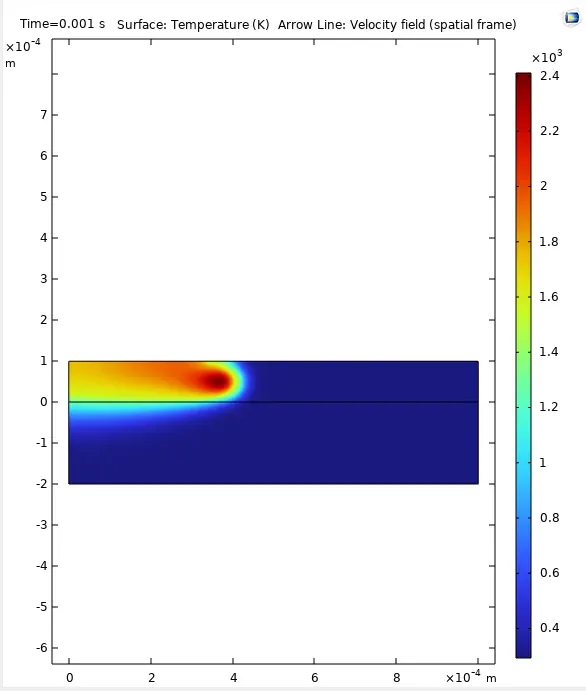
A 2D model couples Marangoni convection, heat transfer and thermo-mechanical stress; a 3D model resolves the full temperature field along a scan track. A random-forest surrogate trained on synthetic data maps peak temperature across laser power and scan speed in under a second.

My contribution

Sole author: problem definition, implementation, experiments, evaluation and documentation.

Challenges

Ill-conditioned coupled systems at keyhole inception (about 4.4 million unknowns), and the gaps between 2D, 3D and surrogate predictions.

Results

  • The 3D model predicts a peak temperature of 3,452 K — keyhole regime; the 2D model underestimates it by about 30% and misclassifies the regime.
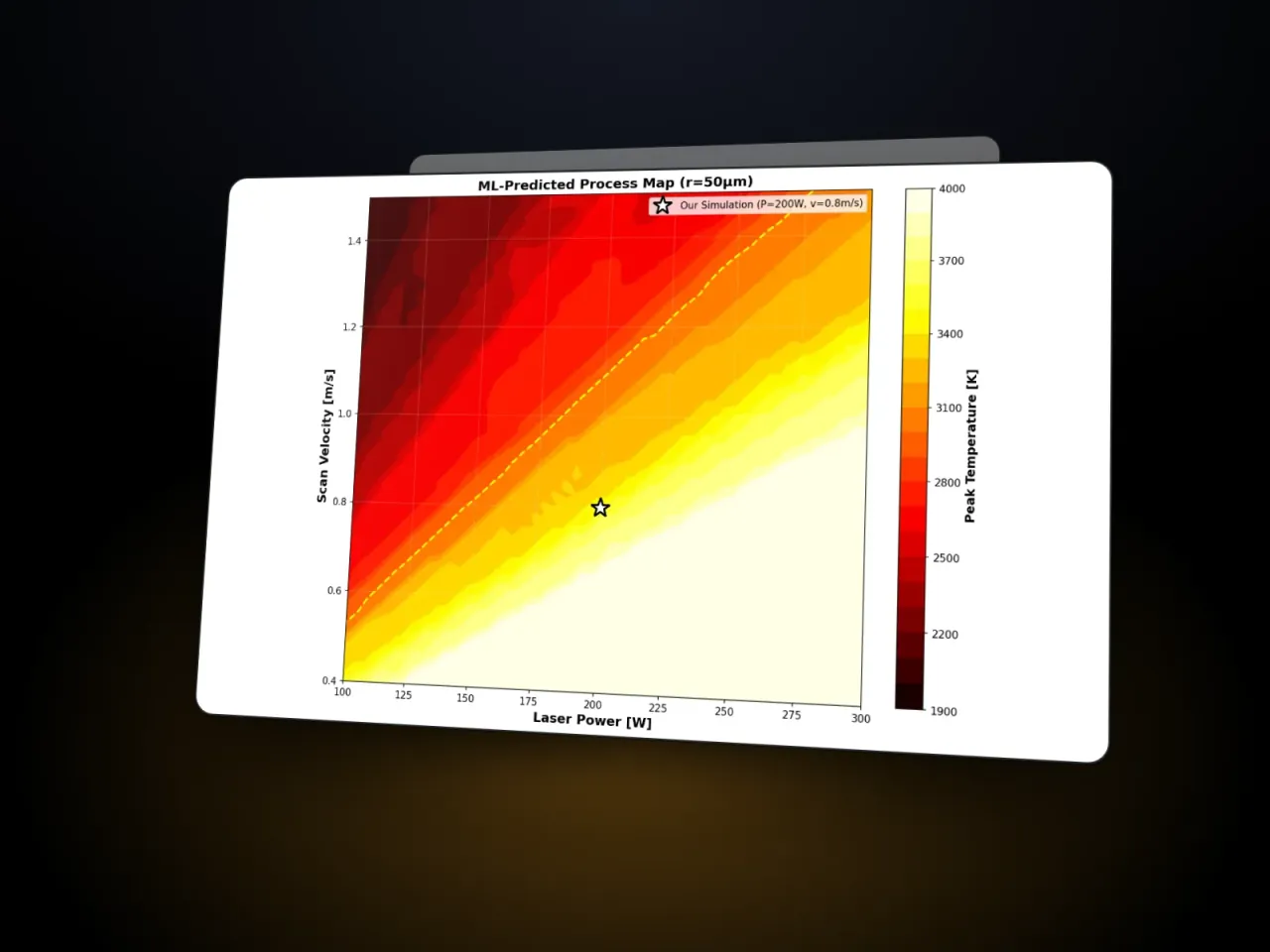
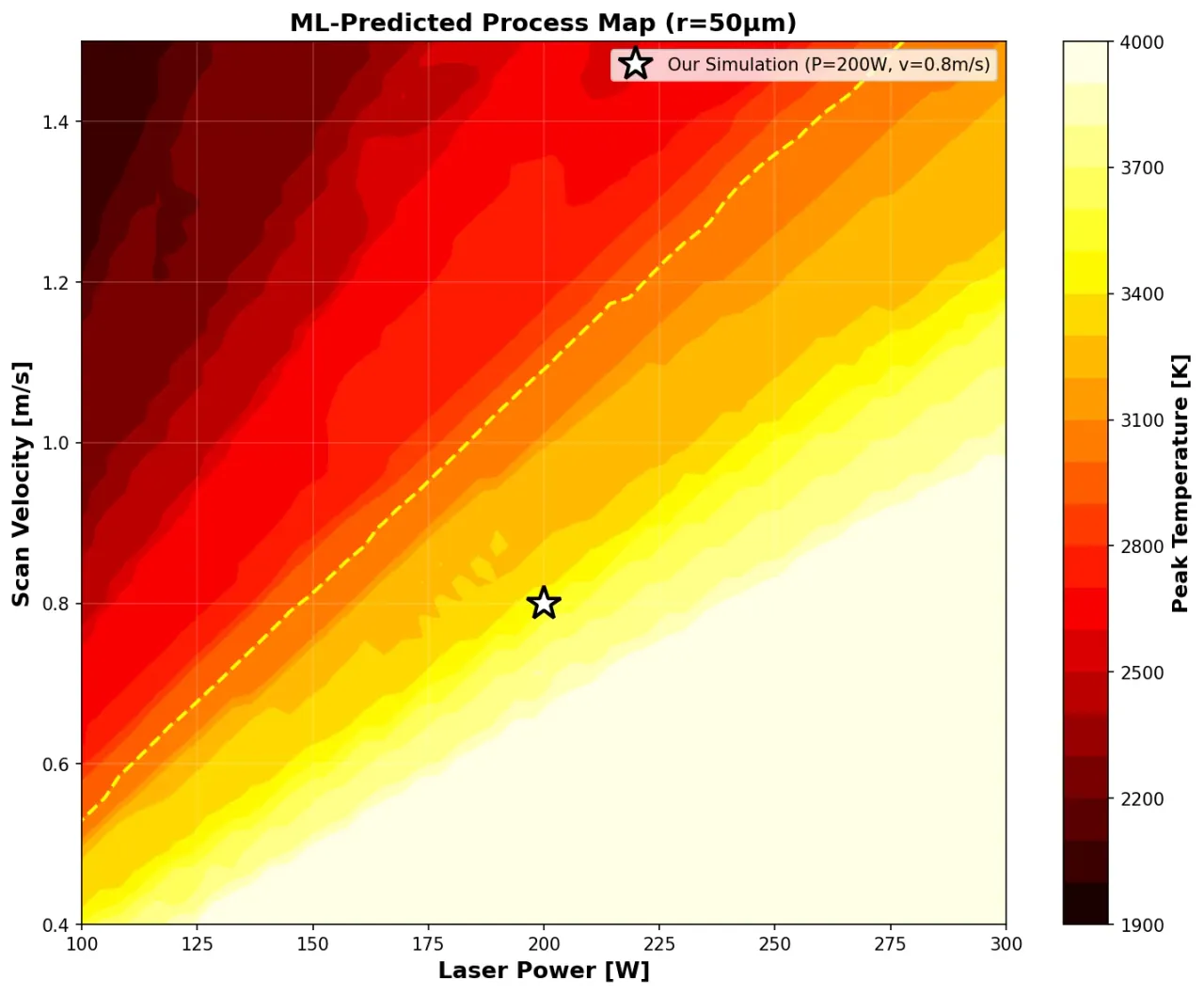
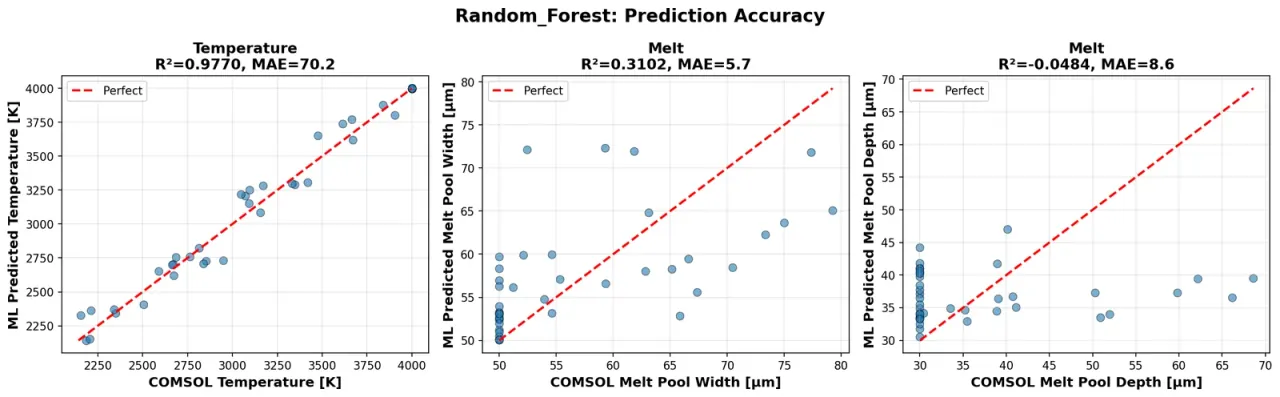
  • Surrogate temperature prediction: R² = 0.977 on held-out synthetic data; melt-pool width and depth predictions are not reliable.
  • At the reference point the surrogate underestimates the 3D result by about 750 K — documented as a limitation of training on synthetic data.
  • A 2,500-point process map in under one second, instead of months of serial simulation.
Surrogate process map of peak temperature over laser power and scan speed
Random forest accuracy for temperature, width and depth
2D melt pool temperature and flow field

More projects

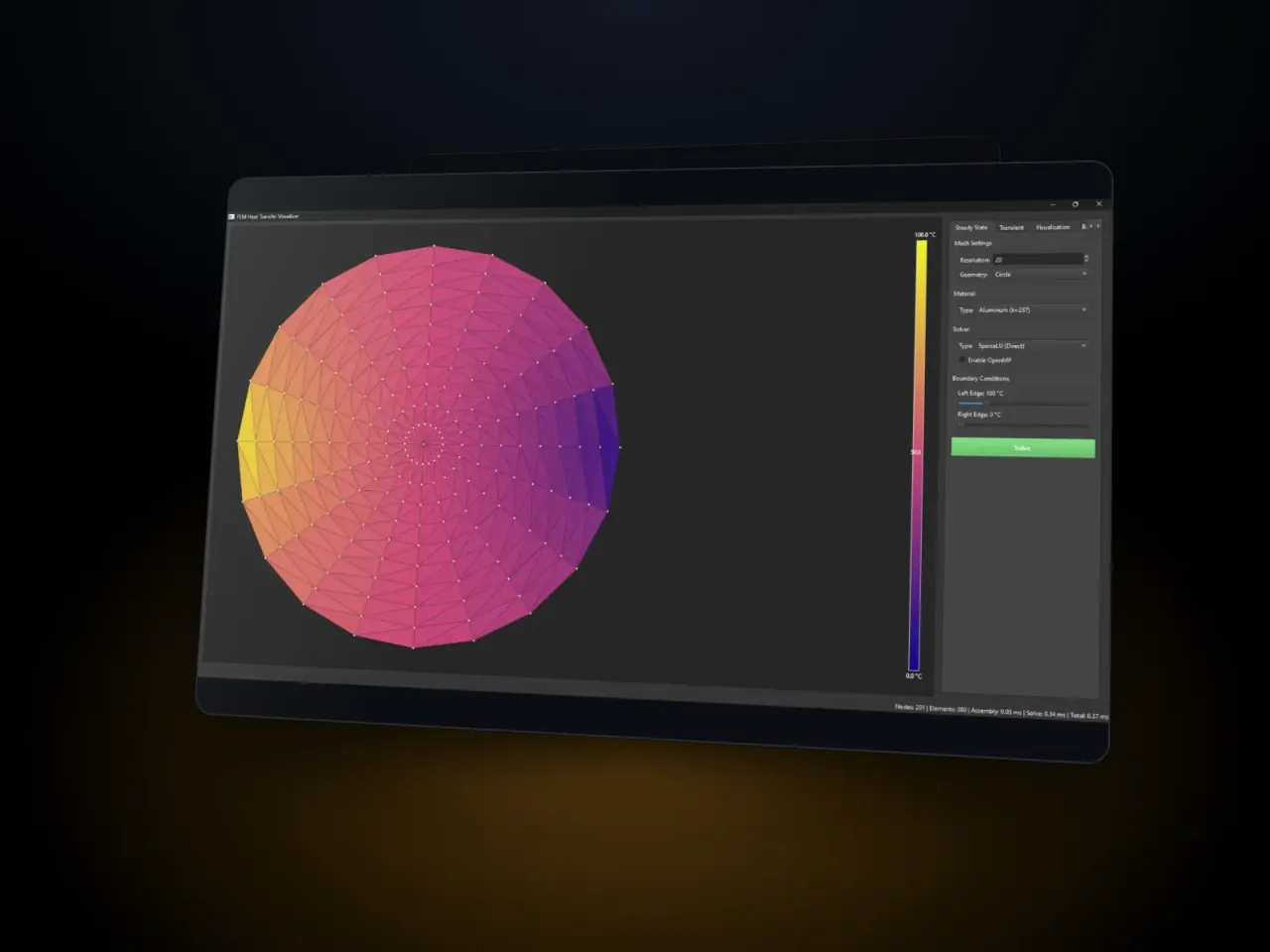
Finite Element Heat Transfer Solver

Scientific Computing2025

Finite Element Heat Transfer Solver

A C++20 finite element solver for 2D steady and transient heat conduction with nonlinear materials, parallel assembly and an interactive Qt interface.

4.2× faster assembly with OpenMP on a quad-core machine for meshes above 5,000 nodes.

View details
NUFFT for Two-Electron Repulsion Integrals

Scientific Computing

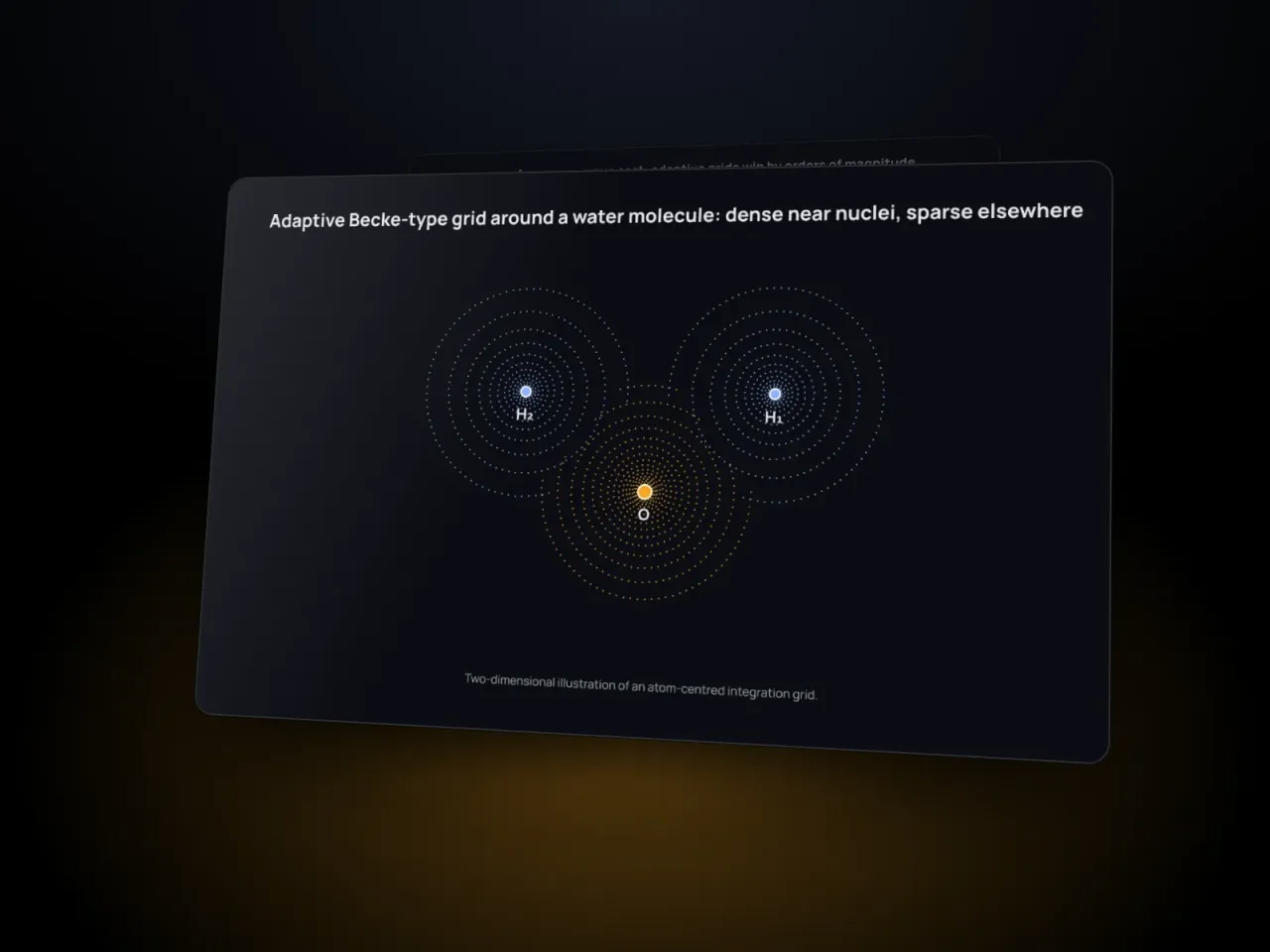
NUFFT for Two-Electron Repulsion Integrals

Computing a core quantum-chemistry bottleneck with non-uniform FFTs on adaptive grids — far more accurate with far fewer points.

NUFFT on Becke grids: relative error 4.54 × 10⁻⁶ with 7,760 grid points.

View details
Data Assimilation, Climate and Ecological Dynamics

Scientific Computing

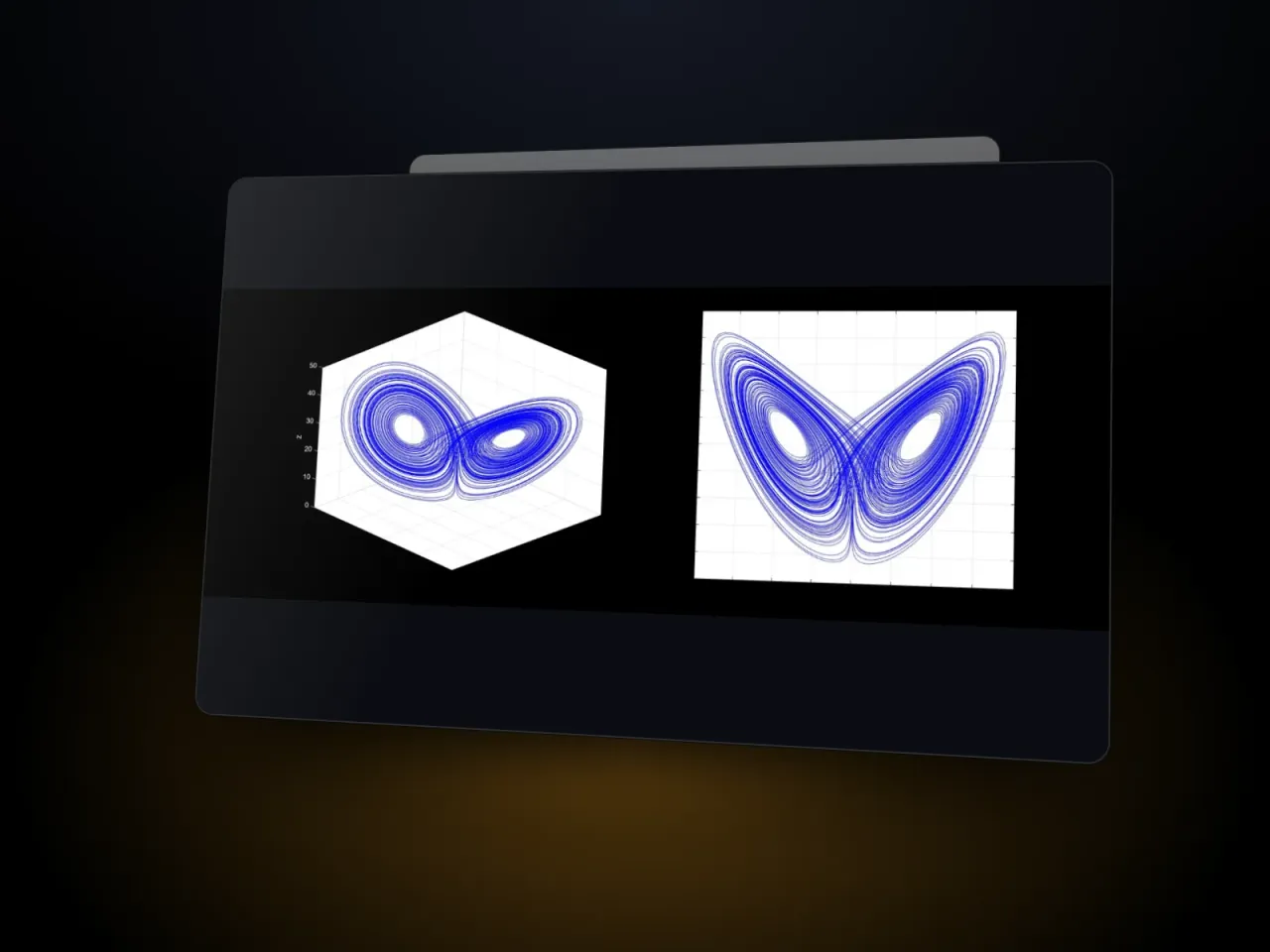
Data Assimilation, Climate and Ecological Dynamics

Three MATLAB studies of nonlinear dynamical systems: data assimilation for the chaotic Lorenz system, bistability in an energy-balance climate model, and integrator accuracy for predator–prey dynamics.

Data assimilation tracks the Lorenz system with over 99% correlation despite chaos.

View details

Let’s scope your project

Share what you need. You will receive questions, an approach and a quote — no obligation.