How many days does your price list lag behind the exchange rate?
When the exchange rate jumps, replacement costs rise the same day but price lists change days later. How to measure that gap and close it with automated, approved pricing.
- Mehdi Hassanbeigi
- 25 November 2026
- 2 min read
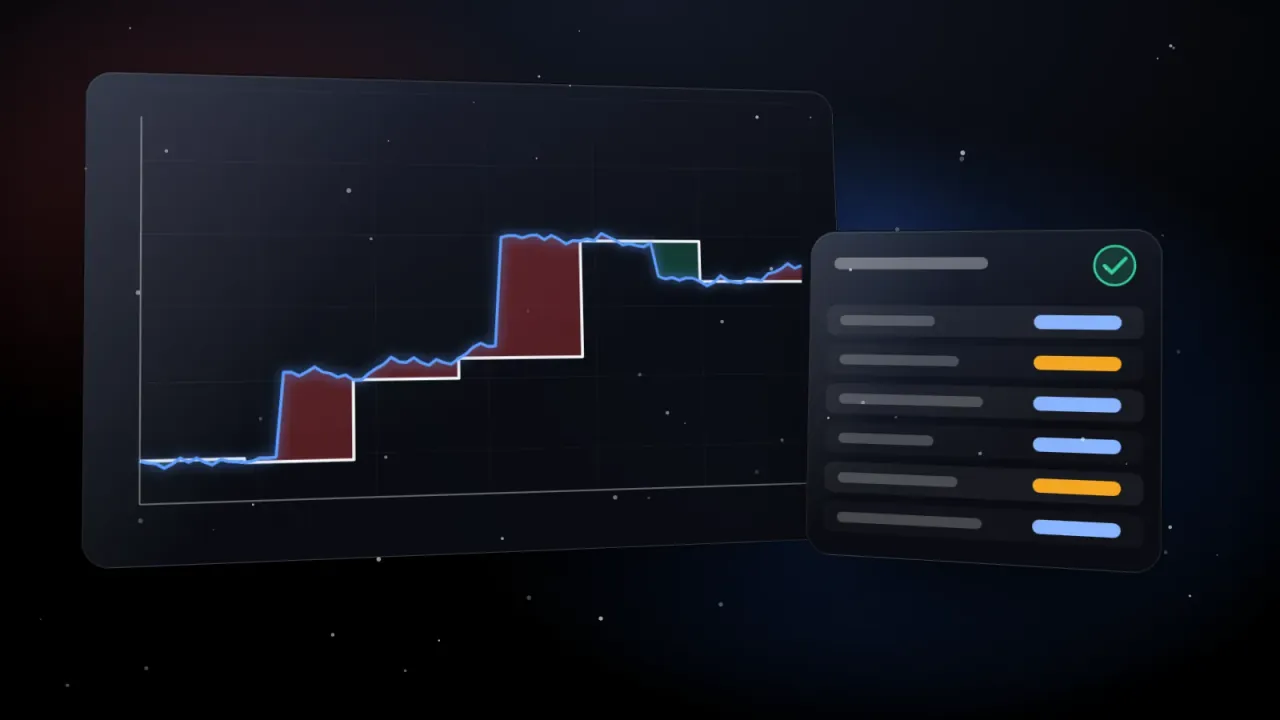
For importers and distributors, the cost of replacing stock rises on the same day the exchange rate jumps, but the price list usually changes days later. During that gap, goods are sold at prices that no longer cover the cost of buying them again.
A simple formula shows how far prices should move. If α is the share of the cost that depends on foreign currency, S0 is the rate the current list was calculated with and S is today's rate:
P = P0 × ( α × S / S0 + (1 − α) )
With a 70% currency share and a 6.4% rise in the rate, prices should go up by about 4.5%. Every day this update waits means less revenue on every single sale.
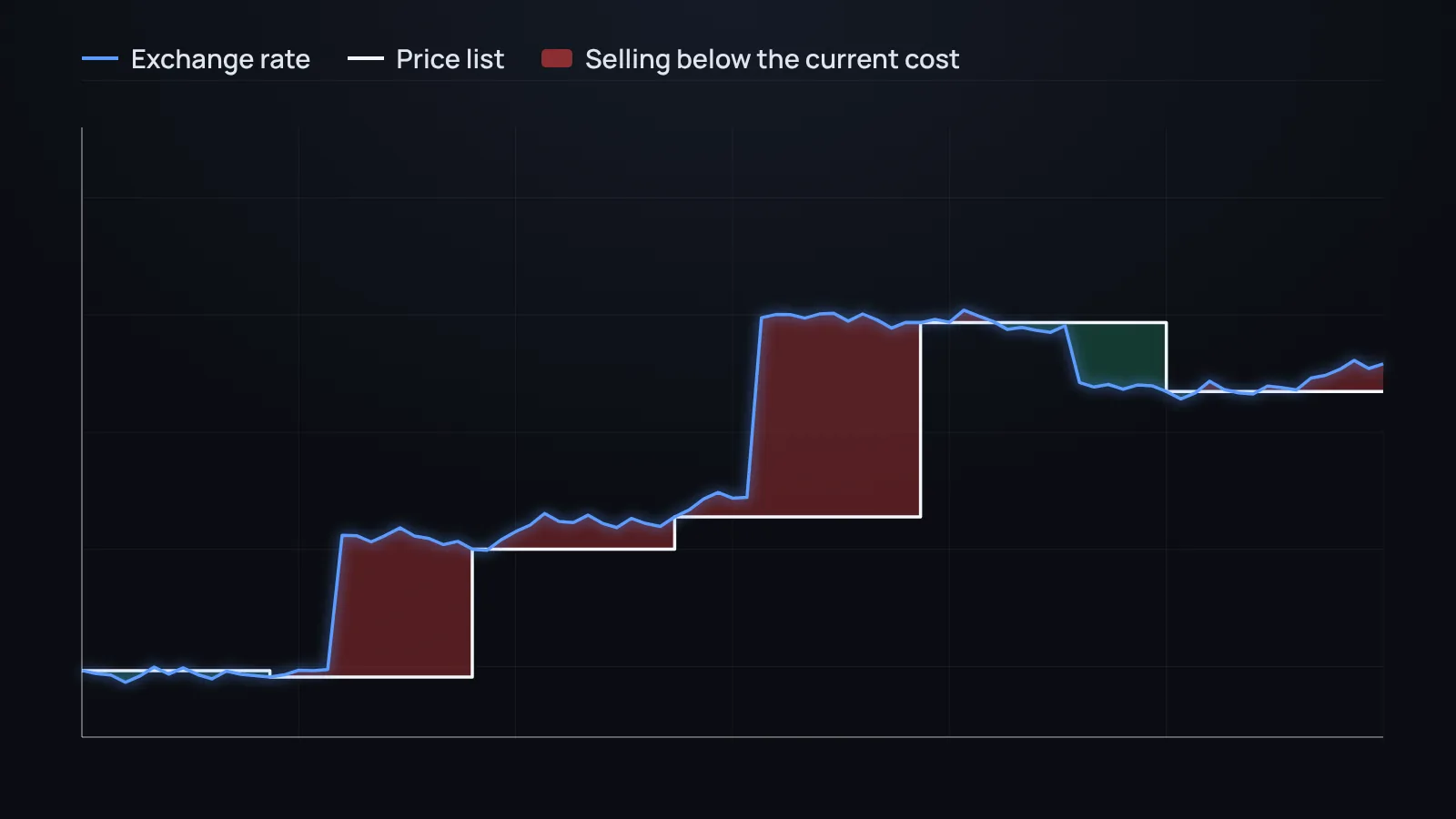
The challenges
- Slow manual recalculation. Updating hundreds of prices in Excel takes hours, and mistakes are almost certain.
- Different prices from different people. Without one official list, every salesperson quotes their own number.
- No history. Nobody can say who changed a price, when, and based on which rate.
- Fear of big jumps. Managers want control over large changes, so updates wait for a meeting.
How we solve it
- Agree the rules once. The currency share, rounding rules and approval thresholds are set with management and written down.
- Fetch the rate safely. The rate is retrieved automatically and checked for age, range and sudden jumps.
- Recalculate automatically. Small changes are published automatically; large ones wait for a manager's approval.
- Publish one official list. Every salesperson sees the same list, with a clear validity period, ready to print or export.
- Keep the full history. Every rate, calculation and approval is stored with the date and the user.
This is the approach used in the pricing management system built for an automotive parts importer: the manual recalculation cycle is replaced by an automatic, controlled process, and every price can be traced back to the rate and rule behind it.
- Pricing
- Exchange rate
- Business automation